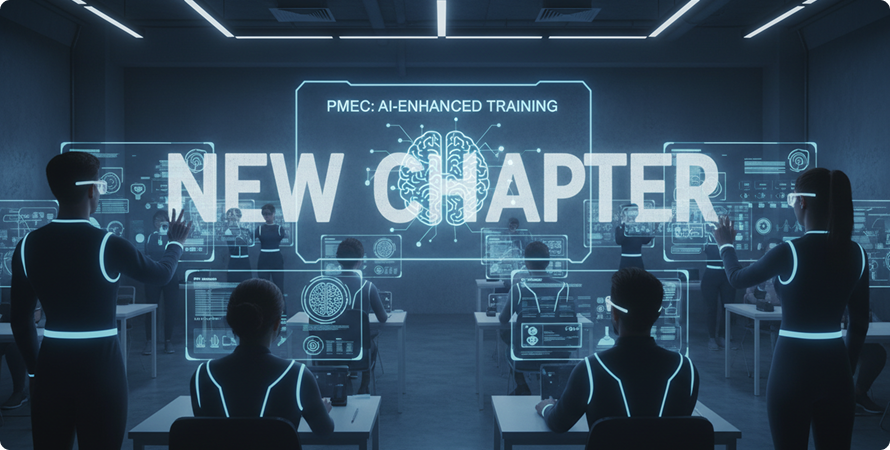
For years, corporate training followed a familiar model: a fixed agenda, one classroom, one set of materials, and one final evaluation. It worked for a certain time. But today’s professionals face faster decisions, complex projects, new technologies, and business environments that do not wait for traditional learning cycles. This is why Artificial Intelligence is becoming one of the most important shifts in professional training. AI does not make learning colder. Used well, it makes learning more personal, more practical, and more measurable. For PMEC, this shift is not a trend to watch from a distance. It is part of a wider evolution in how professional development should serve learners, managers, project teams, and organizations. As PMEC begins implementing AI-enhanced training experiences, the focus is clear: support the human trainer, strengthen the learner journey, and connect training more directly to workplace performance. AI does not replace the expert. It expands the expert’s reach. A senior trainer brings what no system can fully replace: judgment, stories, industry context, facilitation skills, and the ability to challenge how people think. AI can support this expertise by helping learners practice, review, assess, and improve in a more focused way. In project management, for example, AI can help learners work through a delayed project scenario, identify stakeholder risks, review scope changes, and test decision-making. In business analysis, it can create requirements-gathering simulations. In leadership training, it can help managers practice communication, feedback, and change conversations. The result is not “more technology.” The result is more meaningful practice.
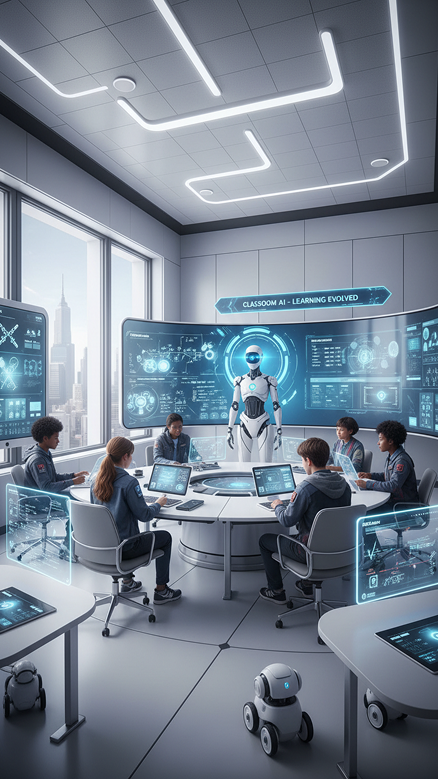
Two learners can attend the same course and need completely different support. One may struggle with terminology. Another may understand the concepts but fail to apply them under pressure. A third may need advanced case studies rather than basic explanations. AI-supported learning can help identify these differences earlier. Through pre-assessments, adaptive questions, guided reviews, and personalized practice, learners can spend more time on the skills that matter most to them. This is especially valuable in professional training, where participants often come from different industries, seniority levels, and business backgrounds. From attendance to evidence. One of the biggest weaknesses in traditional training is that success is often measured by attendance or satisfaction alone. Those indicators matter, but they do not answer the real question: did the learner improve? AI can support better measurement by helping trainers and organizations track understanding, identify weak points, and reinforce learning after the session. It can support scenario-based exercises, knowledge checks, post-training reviews, and continuous development plans. This changes training from a single event into an ongoing improvement journey. PMEC’s AI direction and the 2026 training landscape. PMEC’s 2026 Training Catalogue places AI & Digital Skills as one of its key development pillars. Programs such as AI Assisted Decision Making, AI in HR Functions, AI for Managers & Executives, AI for Marketing & Sales, Data Analysis for Non-Specialists, Cyber Awareness for Executives, and Digital Transformation & Innovation Lab reflect a clear message: every professional must understand how to work smarter with technology. But the real value of AI training is not learning tools for the sake of tools. It is learning how to use AI responsibly, strategically, and practically inside business decisions, people management, marketing, analysis, transformation, and leadership. The future of training is human, supported by intelligent systems. The strongest learning experience is not fully automated. It is intelligently supported. The future belongs to training models that combine expert facilitation, practical exercises, AI-supported feedback, and measurable outcomes. For professionals, this means faster learning and better application. For organizations, it means training that can be connected more clearly to performance. For PMEC, it is a continuation of its mission: turning knowledge into practical impact.